
7:15pm on a Friday.
You've been scrolling the same delivery app for twenty minutes. Pizza. Burgers. The noodle place that was soggy last time.
Through the wall, your neighbour's kitchen smells of garlic and something slow-cooked. Your stomach answers.
You don't know her name. You order the noodles again.
That's what WeCook is for.
WeCook
A UK marketplace where local home cooks and bakers sell homemade food, and share the story behind it. Two apps, one for the people craving real food and one for the cooks making it.
Good home cooking already exists on your street. It's just hidden.
Today it travels by word of mouth, neighbourhood chat groups and Instagram DMs. A cook posts a photo. You message to ask if it's still available, how much it is, where to collect. Then you wait.
So you're left choosing between a stranger you can't vet and a chain you're tired of.
The first thing you see isn't a logo. It's a person.
A baker two streets away, flouring the counter in a short kitchen video. A cook's note about the recipe her grandmother taught her. Today's dishes, a price, and a way to order.
WeCook is where you scroll, follow, shop from and support the home cooks near you. That tray coming out of the oven on your street? Now you know who made it.

Every decision started from one question: what does the person on the other side of the screen need right now?
Lead with the cook, not the menu
Remember the fridge, and the tray of food on your street made by someone you'll never know? The missing piece wasn't food. It was the person.
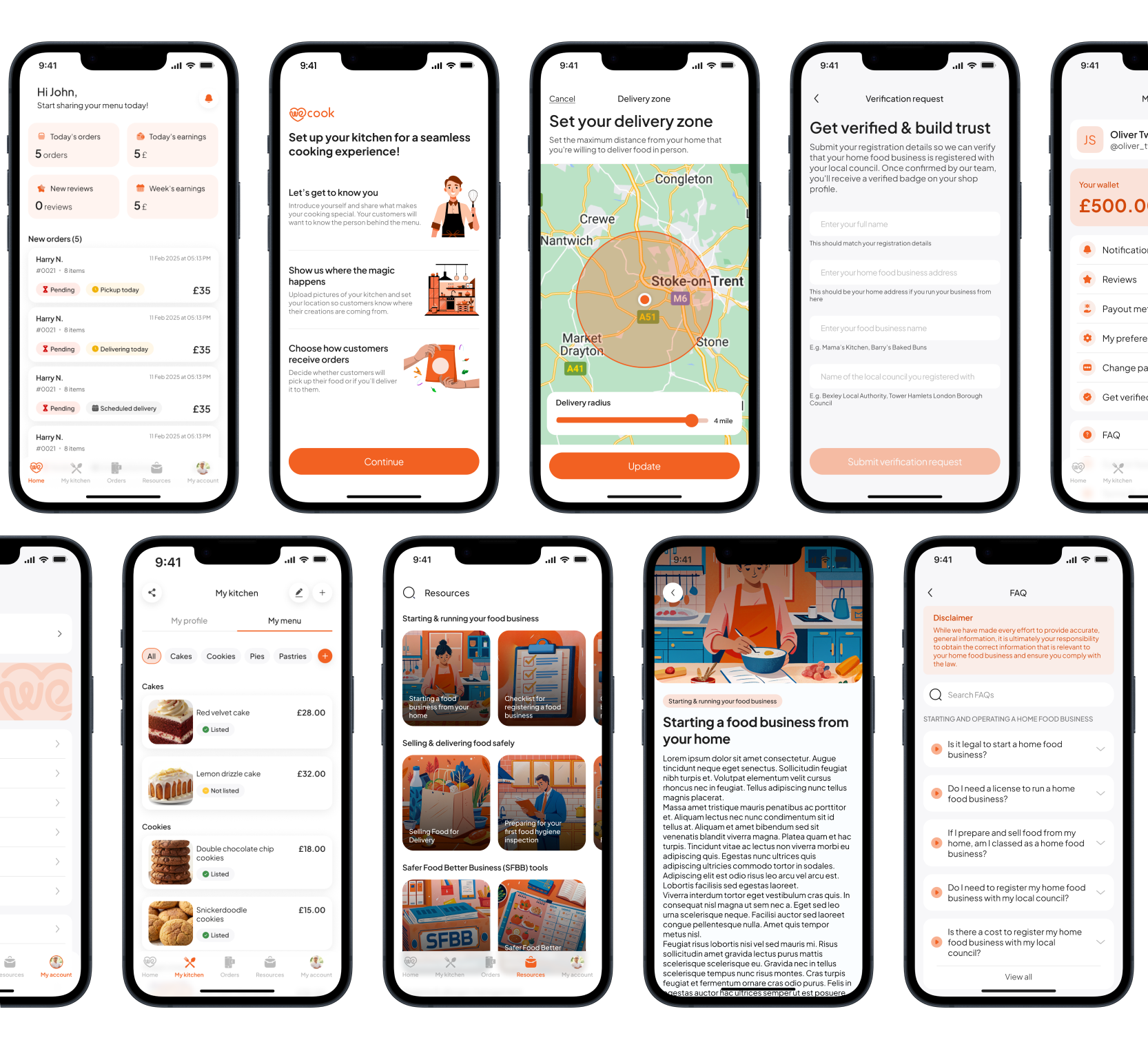
Cook profiles that open like a creator's page: kitchen videos, recipes and personal story first, with the menu below.
When you can see who's cooking, the question shifts from “what do I want?” to “who do I want to eat from?” That gives a customer a reason to come back to the same cook.
Start from the street, not the cuisine
Proximity is the whole point of homemade food, and most cooks only make a few dishes a day.
Discovery that starts with who is cooking nearby, with cuisine and dietary filters layered on top.
A long city-wide list buries the cook three doors down. Showing what's close and available today matches how people already find home cooks: by neighbourhood.
Make food safety visible
Trusting a meal from someone else's kitchen is the biggest leap a customer takes here.
Food-safety status shown on the cook's profile, not hidden in the terms, and a cook onboarding flow that walks sellers through the requirements step by step.
Customers get a reason to say yes. Cooks feel supported in meeting the rules rather than policed by them.
Give cooks a queue, not a dashboard
Before WeCook, a cook's orders lived across dozens of chat threads.
A simple, card-based order queue, stripped down until it fit how home cooks actually work, not how restaurants work.
Home cooks are not restaurant operators. The tool should feel as familiar as the chat they already use, with the chaos taken out.
Where it is now
What I learned
Every choice that helps customers lands on cooks too, and the cooks' side has to be simple enough to adopt in an evening.
Faces, kitchens and visible safety status did more design work than any single screen.
The cook's order management looks simple because it took the most iteration.
What I'd do next
7:15pm, Friday.
Garlic and something slow-cooked, drifting through the wall again.
This time you know her name.
And this time, one of those plates is coming to you.