
11:47 p.m.
The lights are off but your mind isn't.
You replay the meeting, the email you didn't send, the thing you snapped at someone.
You open your notes app. The cursor blinks. You type “today was” and delete it.
You put the phone face-down. The weight stays exactly where it was.
That's what Gently is for.
Gently
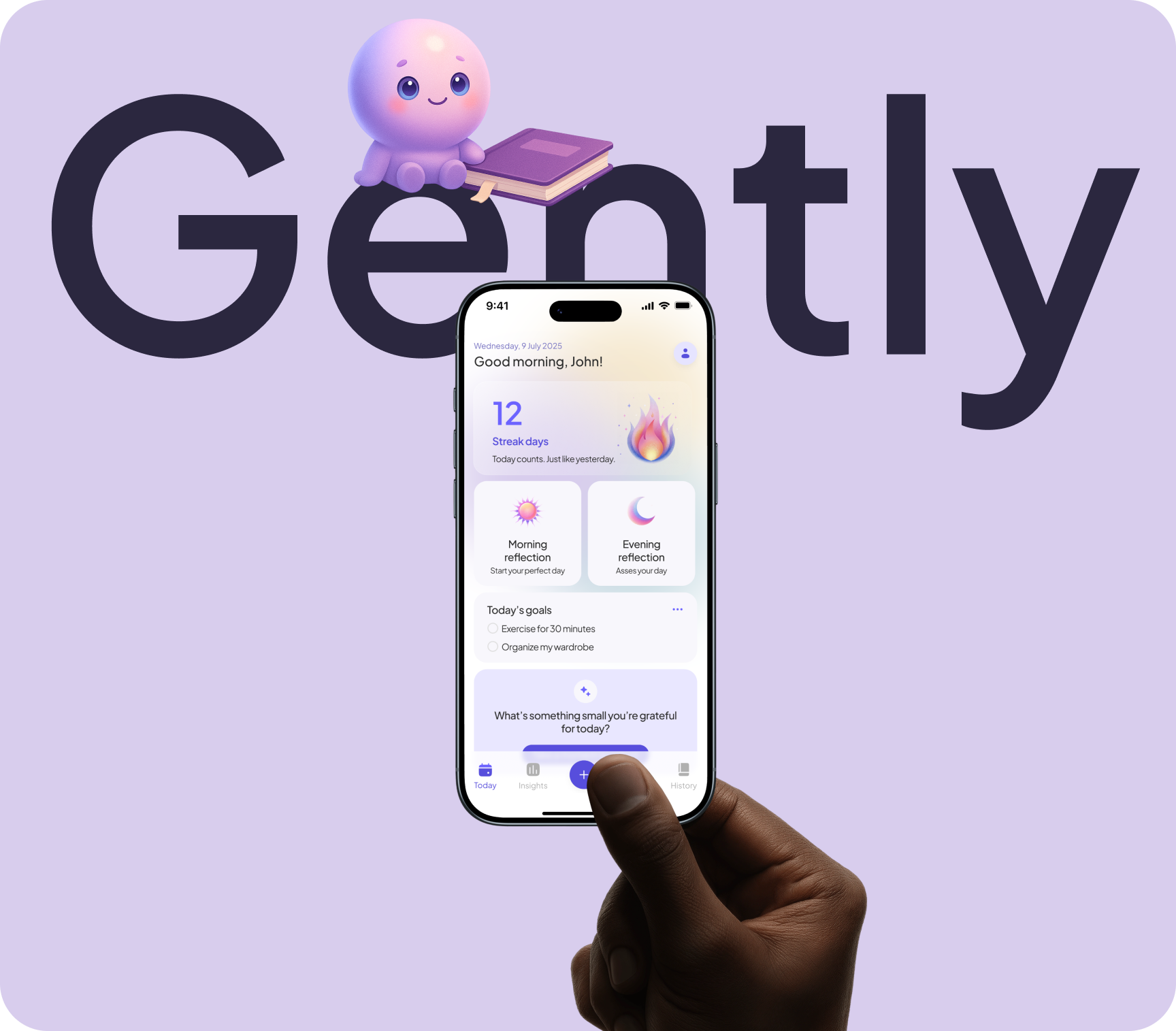
UX research, product design and UX writing for an AI journal that listens before it advises. You write the way you'd talk to a friend; Gently tells you what it heard and asks one good question.

Everyone believes in journaling. Few keep it up.
Most people already believe journaling is good for them. Very few keep it up. I reviewed the apps people reach for and talked to people who had tried journaling and quit. Each option fails them in a different way.
Under all of them sits the same thing: guilt. Miss a day, the streak breaks, you feel behind, and you quit. That was the most common reason people gave for stopping.
What if the page wrote back?
Gently is an AI journal that listens before it advises. You write the way you'd talk to a friend. Gently tells you what it heard, asks one good question, and helps you name what's underneath.
Go back to 11:47 p.m. This time there's no blinking cursor. There's an invitation: “Take a moment for yourself. Use this space to think out loud, sort through feelings, or simply breathe on paper.”
Every decision answers one moment in someone's night.
Journaling as a conversation, not a form
Remember typing “today was” and deleting it? A blank field gives you nothing to push against, and nothing comes back when you do write.
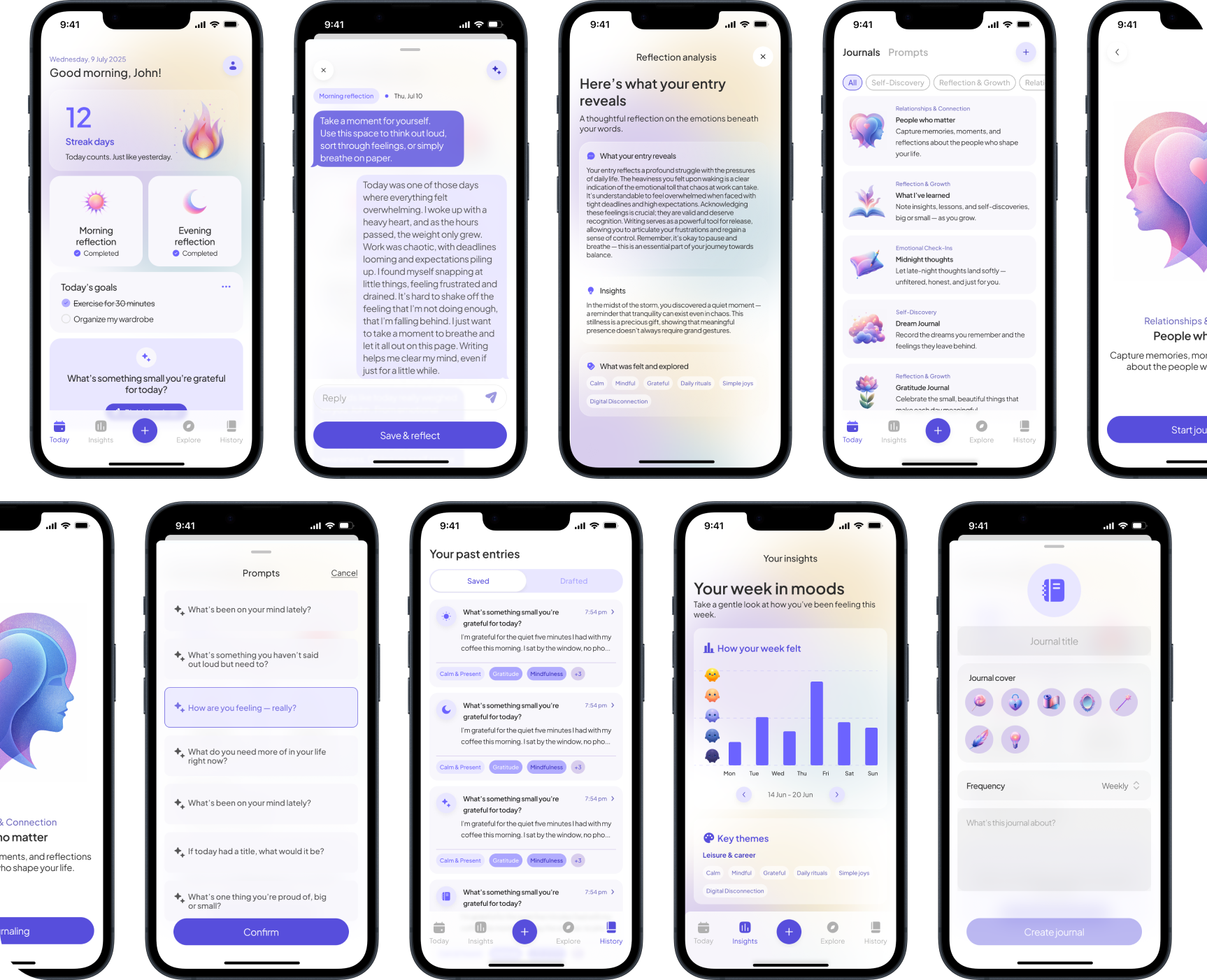
Entries open as a soft chat thread. Gently starts with an invitation, you write freely, and it replies by naming what it heard (“It sounds like today really weighed on you”) before asking one gentle question.
Writing starts to feel like being listened to. One question, not three, gives you a reason to keep going without feeling interviewed.
Reflection before advice
She doesn't want her night fixed. She just needs to get it out and feel like it landed somewhere.
After “Save & reflect”, Gently shows one short insight and the emotions it noticed as tags (Calm, Grateful, Simple joys). It mirrors; it doesn't prescribe.
People learn to name their feelings, and the tags power History without asking for anything extra.
Onboarding that sets the tone, not just the profile
A new dad who's wary of wellness apps will leave the second it sounds like a therapist. One AI tone would overwhelm him and bore someone else.
Short, skippable questions about why you're here, how you cope, and how comfortable you are opening up. Each one says why it's asked.
Personalisation feels like care instead of data collection, and no one is forced to share.
A daily ritual without the guilt
Put the phone face-down for four nights and most apps greet you with a broken streak. That's where people quit.
Today is built around a morning and an evening reflection, light goals and one daily prompt. The streak card celebrates without shaming: “Today counts. Just like yesterday.”
The habit hangs on moments you already have, waking up and winding down, instead of an abstract target to fail.
Your words are always safe
At 11:47 p.m., halfway through something honest, you close the app. Losing that is worse than losing a to-do.
Closing an unfinished entry saves it as a draft automatically and says so plainly: “Don't worry — your thoughts are safe.” Deleting always asks first.
Trust in small moments makes people willing to write honestly in the big ones.
Where it is now
What I learned
The same insight lands as care or as judgment depending on a few words. Writing Gently's replies was as much design work as drawing the screens.
Asking less, explaining why, and letting people skip earned more honest answers.
A wellbeing app will meet people at their lowest.
What I'd do next
11:47 p.m.
Your mind is still loud.
But this time you write it down, and something writes back: “It sounds like today really weighed on you.”
You answer one question, put the phone down, and the room feels a little lighter.